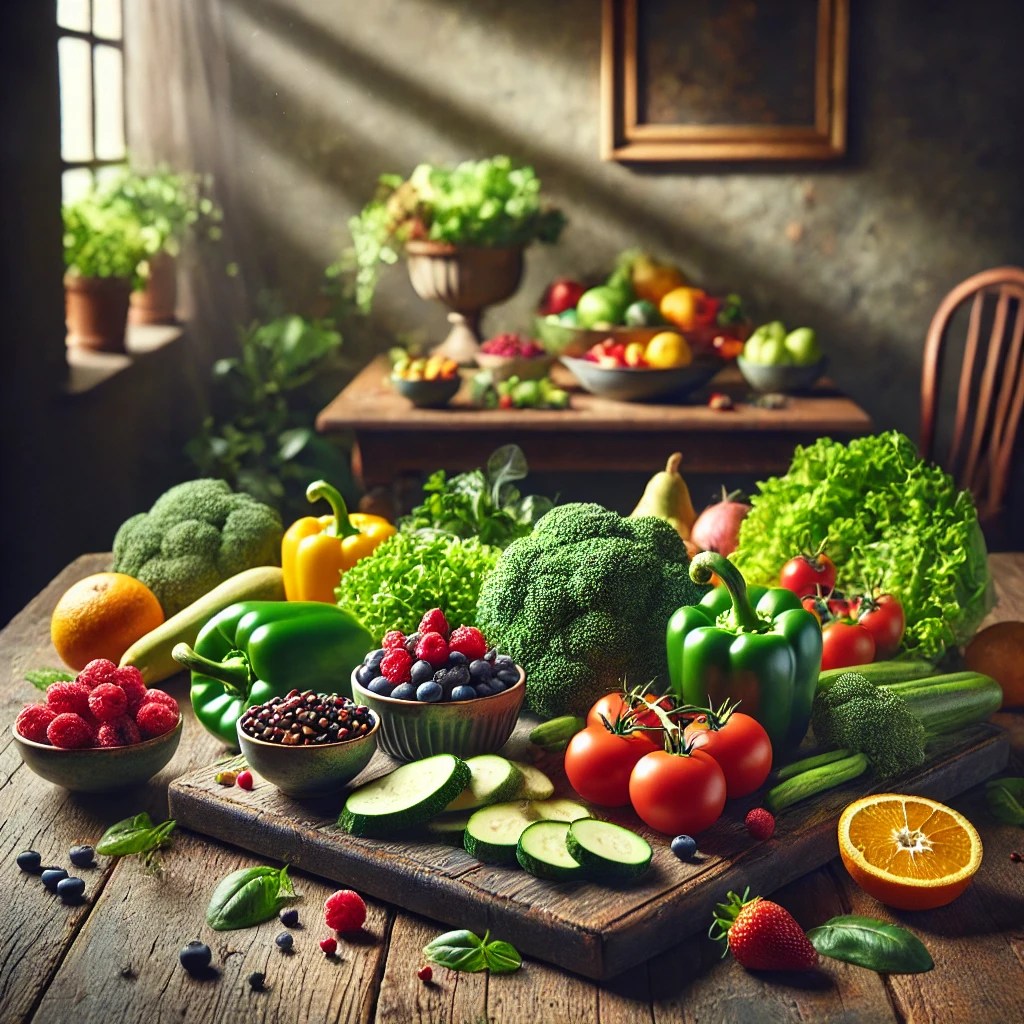
A low-carb diet focuses on reducing carbohydrate intake, which requires careful selection of foods with low sugar and carbohydrate content. Which fruits and vegetables should you include in your diet, and which are better to avoid? Let’s explore this in detail.
Vegetables in a Low-Carb Diet
Vegetables are the foundation of a low-carb diet, providing essential vitamins, minerals, and fiber. However, not all vegetables are suitable. Let’s focus on the ones that fit best into a low-carb lifestyle.
The Best Low-Carb Vegetables
- Leafy Greens
- Spinach, kale, arugula, and romaine lettuce – minimal carbs and rich in vitamins.
- Net carbs per 100 g: 1-2 g.
- Cruciferous Vegetables
- Broccoli, cauliflower, Brussels sprouts, and cabbage – high in fiber and antioxidants.
- Net carbs per 100 g: 3-4 g.
- Low-Starch Vegetables
- Zucchini, cucumber, and eggplant – versatile in cooking, perfect for salads, casseroles, or as pasta substitutes.
- Net carbs per 100 g: 3-5 g.
- Peppers
- Green peppers are the lowest in carbs (3-4 g net carbs per 100 g) and the best choice for a low-carb diet. Red and yellow bell peppers are sweeter and contain slightly more carbs (6-7 g net carbs per 100 g) but can still be enjoyed in moderation.
- Tomatoes
- Fresh tomatoes have about 2-3 g net carbs per 100 g, making them an excellent addition to salads and main dishes. However, tomato products like concentrates contain more sugar (10-12 g net carbs per 100 g) and should be consumed sparingly.
- Avocado
- Technically a fruit, but a perfect match for vegetables in a low-carb diet due to its high healthy fat content and minimal sugar.
- Net carbs per 100 g: 1.8 g.
Vegetables to Limit
- Potatoes, sweet potatoes, and corn – high in starch and carbohydrates.
- Net carbs per 100 g: 15-20 g.
Fruits in a Low-Carb Diet
Fruits can be more challenging in a low-carb diet because they contain natural sugars. Choose those with a low glycemic index and limited carbohydrate content.
The Best Low-Carb Fruits
- Berries
- Raspberries, blackberries, blueberries, and strawberries – low in sugar, high in fiber and antioxidants.
- Net carbs per 100 g: 5-7 g.
- Citrus Fruits: Oranges, Lemons, Limes
- Oranges: Can be eaten in moderation as they contain about 9-11 g net carbs per 100 g. They are rich in vitamin C, potassium, and flavonoids that support heart health and the immune system.
- Lemons and limes: Much lower in carbs (2-3 g net carbs per 100 g) and ideal for adding flavor to water, tea, or dishes.
- Are oranges good for low-carb diets?
- Yes, but in moderation:
- Oranges can be good for low-carb diets if you eat them in small portions and count their carbs towards your daily limit (usually 20-50g net carbs).
- Things to avoid:
- If you are following a more restrictive version of low-carb, such as a ketogenic diet (20-30g net carbs per day), oranges and tangerines can quickly hit your daily carb limit.
- Melons and Watermelon
- Their high water content makes them a good choice in small amounts.
- Net carbs per 100 g: 7-8 g.
Fruits to Limit
- Bananas, grapes, and mangoes – high in sugar.
- Net carbs per 100 g: 15-20 g.
Practical Tips
- Choose Variety
- A colorful plate ensures a rich supply of vitamins and minerals.
- Control Portions
- Even low-carb fruits and vegetables can add up in carbohydrates if eaten in large quantities.
- Focus on Seasonality
- Fresh, seasonal fruits and vegetables are more nutritious than those available year-round.
Low-Carb Meal Ideas with Fruits and Vegetables
- Greek Salad: Cucumber, tomato, green bell pepper, olives, and feta, drizzled with olive oil.
- Avocado Pesto: Blended avocado with basil, olive oil, and walnuts – perfect as a sauce for grilled vegetables.
- Citrus-Berry Smoothie: Raspberries, orange juice, lime juice, and a splash of coconut milk.
- Stuffed Bell Peppers: Green bell peppers filled with ground meat and spices, baked with cheese.
A low-carb diet doesn’t mean giving up fruits and vegetables – it’s about making smart choices. Leafy greens, broccoli, avocado, green bell peppers, and fresh tomatoes are excellent staples. Oranges, while containing more sugars, can be included in moderation, adding a boost of vitamin C and other nutrients.
Want more inspiration for healthy eating? Visit my blog www.lifestyleforhealthyfeet.co.uk and discover more practical tips on a low-carb diet and foot health care! 😊
 Lifestyle for Healthy Feet
Leave a comment