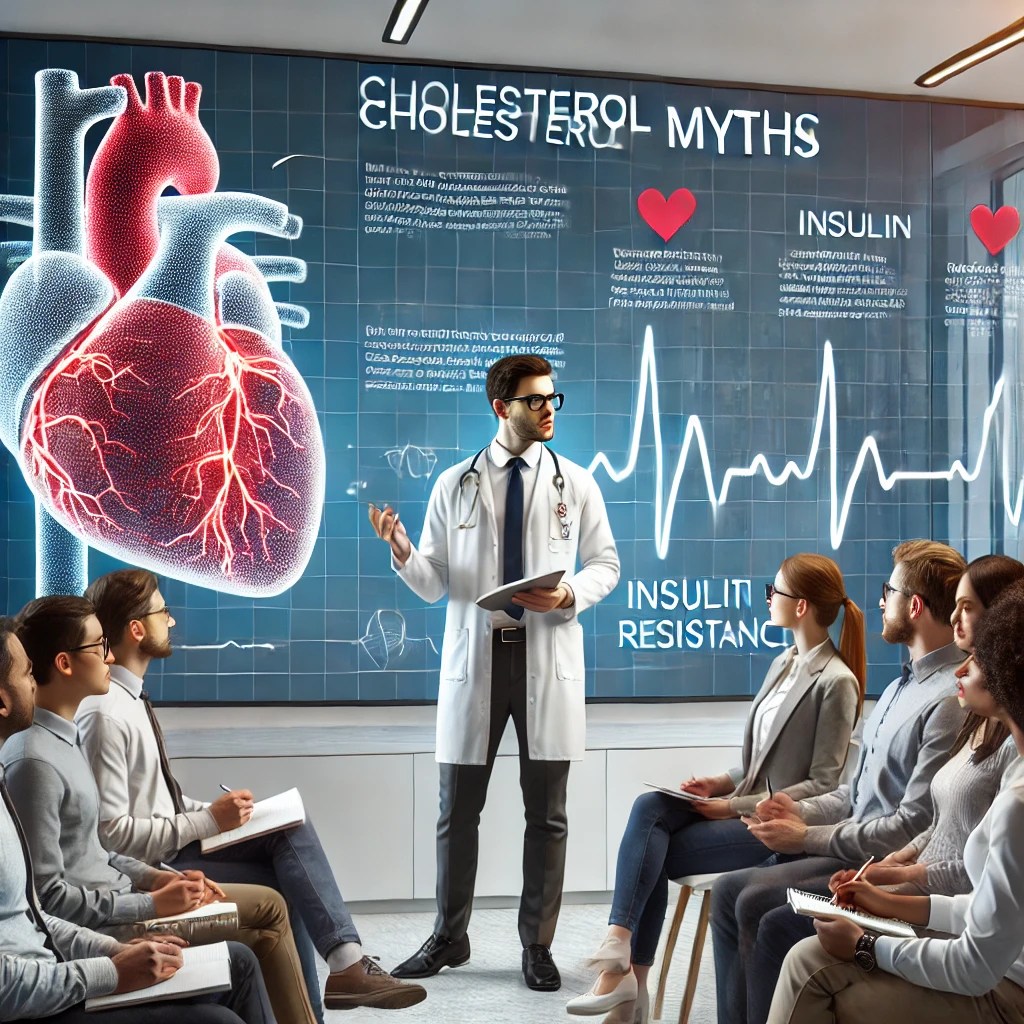
For years, cholesterol has been demonized as the main culprit behind heart disease and other health problems. This has led many to avoid cholesterol-rich foods like eggs, butter, and red meat. However, modern research debunks these oversimplified theories, shedding light on a more complex reality. It turns out that the real issue often lies in insulin resistance, not cholesterol itself.
Popular Myths About Cholesterol
- “Eating high-cholesterol foods raises blood cholesterol levels”
In reality, dietary cholesterol has minimal impact on blood cholesterol for most people. Your body, particularly the liver, regulates cholesterol production. When dietary intake increases, your body produces less, and vice versa. - “High cholesterol always leads to heart disease”
Cholesterol is essential for many bodily processes, including hormone production, cell membrane structure, and vitamin D synthesis. The problem arises from chronic inflammation and metabolic disorders rather than cholesterol alone. - “Eggs are unhealthy because they are high in cholesterol”
Eggs are among the most nutrient-dense foods, rich in protein, vitamins, and minerals. Research shows that moderate egg consumption does not increase cardiovascular disease risk in healthy individuals. - “Only low cholesterol is healthy”
Extremely low cholesterol can be as harmful as high cholesterol. It may lead to hormonal imbalances, weakened immunity, and increased risk of mental health disorders.
The Real Problem: Insulin Resistance
Studies reveal that insulin resistance, not cholesterol, is the primary driver behind many chronic illnesses, including type 2 diabetes, heart disease, and systemic inflammation.
What Is Insulin Resistance?
Insulin resistance occurs when the body’s cells stop responding effectively to insulin, the hormone responsible for transporting glucose into cells for energy. As a result:
- Blood sugar levels remain elevated, prompting the pancreas to produce more insulin.
- Excess insulin contributes to weight gain, chronic inflammation, and lipid imbalances.
How Does Insulin Resistance Affect Health?
- Cardiovascular Diseases
Insulin resistance promotes inflammation in blood vessels, contributing to plaque buildup and atherosclerosis. It also causes:- An increase in small, dense LDL particles (more likely to cause blockages).
- Elevated triglyceride levels.
- Reduced HDL (“good cholesterol”) levels.
- Type 2 Diabetes
Chronic insulin resistance can exhaust the pancreas, leading to insufficient insulin production and type 2 diabetes. - Chronic Inflammation
Insulin resistance increases markers like C-reactive protein (CRP), linked to heart disease, cancer, and neurodegenerative conditions. - Metabolic Syndrome
Insulin resistance is a key factor in metabolic syndrome, characterized by abdominal obesity, high blood pressure, and elevated blood sugar levels.
Preventing Insulin Resistance
- Healthy Diet
A low-carbohydrate or ketogenic diet, focused on whole foods with a low glycemic index, improves insulin sensitivity and stabilizes blood sugar levels. - Regular Exercise
Both strength and aerobic training improve muscle sensitivity to insulin, enhancing glucose utilization. - Avoiding Processed Foods
Reducing intake of simple sugars and trans fats supports healthy metabolism and eases the burden on the pancreas. - Maintaining a Healthy Weight
Reducing abdominal fat significantly improves insulin sensitivity.
Why Cholesterol Is Misunderstood
Cholesterol-related problems often stem from secondary factors like insulin resistance. Dyslipidemia (e.g., high triglycerides and low HDL levels) is more likely a symptom of chronic metabolic issues than the root cause.
The myth of cholesterol persists, but modern scientific research highlights insulin resistance as the real health challenge. Rather than focusing solely on lowering cholesterol, it’s crucial to improve insulin sensitivity through a healthy diet, regular exercise, and lifestyle changes. By addressing the root cause, you can prevent chronic illnesses and enjoy a better quality of life.
Take control of your health with informed decisions—your body will thank you!
 Lifestyle for Healthy Feet
Leave a comment