Nail plate melanoma is a rare but highly dangerous malignant tumor that can appear on both fingernails and toenails. It is sometimes mistaken for other conditions such as nail fungus, bruises, or pigmentation changes. Early diagnosis is crucial because melanoma can develop rapidly and metastasize. How can it be recognized, and how can it be distinguished from other nail diseases?
What Does Nail Melanoma Look Like?
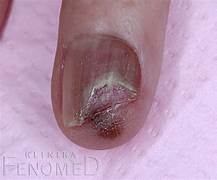
Nail plate melanoma most often appears as a brown or black streak running along the nail. It can also manifest as irregular discoloration of the entire nail plate and, in more advanced cases, lead to its destruction. Characteristic symptoms include:
- Dark, irregular discoloration that gradually increases in size,
- Discoloration extending beyond the nail plate (known as Hutchinson’s sign),
- Nail deformation, splitting, or crumbling,
- No association of the change with an injury (for example, a subungual hematoma may appear after trauma but gradually fades, whereas melanoma remains and grows).
How to Differentiate Melanoma from Other Nail Diseases?
1. Nail Fungus (Onychomycosis)
Nail fungus is one of the most common conditions affecting toenails. It manifests as:
- A change in nail color to yellow, brown, or white,
- Thickening and brittleness of the nail plate,
- Separation of the nail from the nail bed,
- An unpleasant odor (in advanced cases).
Difference: Unlike melanoma, fungal infections develop gradually and rarely cause dark streaks. Additionally, they can be effectively treated with antifungal medications.
2. Subungual Hematoma
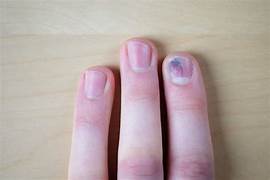
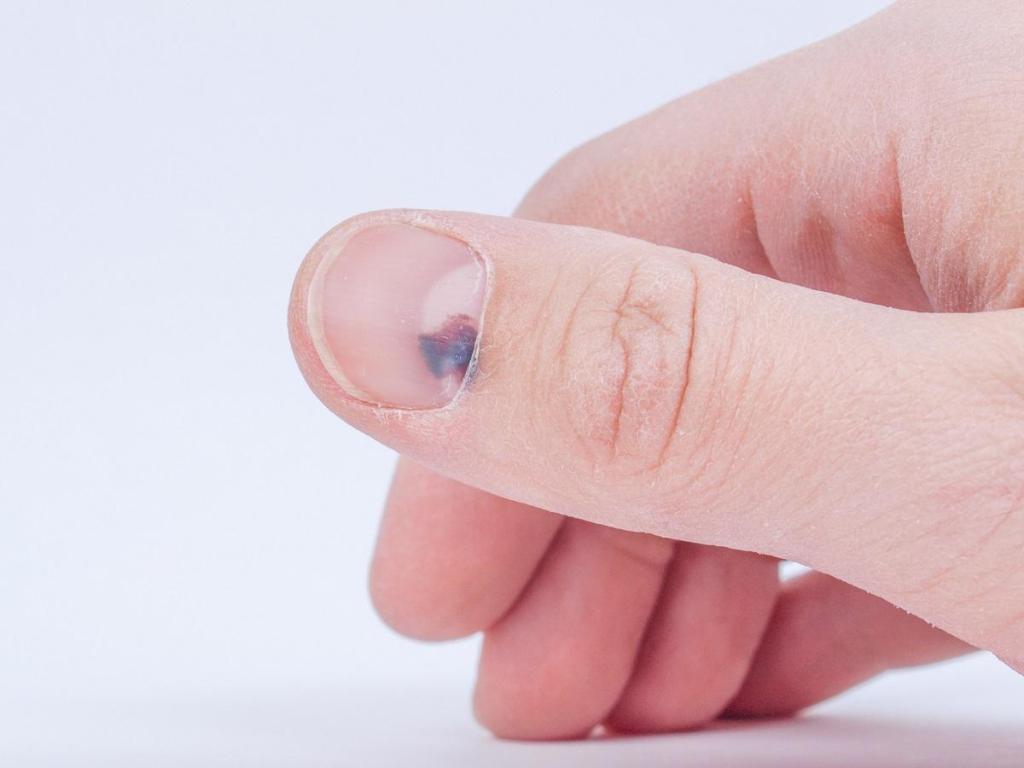
A hematoma can occur after trauma, such as hitting a toe. It is characterized by:
- Dark discoloration (red, purple, or black),
- No extension of the discoloration beyond the nail,
- Gradual movement of the discoloration as the nail grows out.
Difference: A hematoma moves as the nail grows, while melanoma does not.
3. Melanonychia
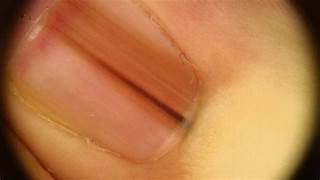
This is a benign pigmentation of the nail caused by excess melanin. It presents as:
- Uniform dark pigmentation in the form of streaks,
- Often occurring in individuals with darker skin tones,
- No destruction of the nail plate.
Difference: In melanonychia, the color is uniform and symmetrical, whereas melanoma appears irregular.
When to See a Doctor?
If you notice a dark, irregular discoloration on your nail that:
- Gradually increases in size,
- Does not disappear over several months,
- Extends beyond the nail,
- Is accompanied by pain, ulceration, or nail deformation, it is essential to consult a dermatologist or podiatrist as soon as possible. Early melanoma diagnosis significantly improves the prognosis and helps avoid severe consequences.
Conclusion
Nail plate melanoma is a serious condition that can be mistaken for other diseases, such as fungal infections, hematomas, or melanonychia. It is crucial to pay attention to unusual nail discolorations, their irregularity, and the lack of connection to trauma. Regular foot and nail health checks and consulting a doctor when suspicious changes appear can be life-saving. Remember, healthy feet are not only an aesthetic concern but also an indicator of overall health!


 Lifestyle for Healthy Feet
Leave a comment