Nail leukonychia is a condition characterized by the appearance of white spots, streaks, or total whitening of the nail plate. It can result from genetic factors, mechanical trauma, nutritional deficiencies, or systemic diseases. It is important to distinguish leukonychia from other nail disorders, such as fungal infections, psoriasis, or bacterial infections, as each requires different treatment approaches.
This article explores the causes of leukonychia, its differentiation from other conditions, and the available diagnostic and treatment options.
Types of Nail Leukonychia
Leukonychia can present in different forms, depending on the extent and cause of the condition.
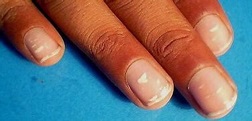
1. Punctate Leukonychia (Leukonychia Punctata) – White Dots
🔹 The most common form, featuring small white spots on the nails.
🔹 Usually caused by minor mechanical trauma, such as hitting or biting the nails.
2. Striated Leukonychia (Leukonychia Striata) – White Bands
🔹 Characterized by horizontal white streaks across the nails.
🔹 May be associated with zinc, calcium, or protein deficiency, or exposure to heavy metals like lead or arsenic.
3. Total Leukonychia (Leukonychia Totalis) – Completely White Nails
🔹 The entire nail plate turns white, from the nail matrix to the free edge.
🔹 Can be genetic (e.g., Bart-Pumphrey syndrome) or a sign of liver or kidney diseases.
4. Partial Leukonychia (Leukonychia Partialis) – Partial Nail Whitening
🔹 Affects only part of the nail, such as half or the tip of the plate.
🔹 Often linked to nutritional deficiencies or localized trauma.
Common Causes of Nail Leukonychia
🔹 Mechanical trauma – caused by hitting, excessive filing, or aggressive manicures.
🔹 Nutritional deficiencies – low levels of zinc, calcium, iron, and protein can disrupt nail keratinization.
🔹 Fungal and bacterial infections – can lead to white discoloration, often mistaken for leukonychia.
🔹 Allergic reactions – exposure to harsh nail polishes, gels, or detergents can cause nail whitening.
🔹 Systemic diseases – conditions like diabetes, anemia, psoriasis, liver and kidney diseases can affect nail appearance.
🔹 Heavy metal poisoning – exposure to arsenic, lead, or mercury can trigger striated leukonychia.
How to Differentiate Leukonychia from Other Nail Conditions?
White discoloration on nails can also be a symptom of other conditions, so differentiation is key.
1. Leukonychia vs. Fungal Nail Infections (Onychomycosis)
🔹 Fungal infections cause yellowish, brown, or white discoloration, often accompanied by thickening and brittleness.
🔹 In leukonychia, white spots are flat, and the nail remains smooth and unbroken.
🔹 Nail culture tests help confirm fungal infections.
2. Leukonychia vs. Nail Psoriasis
🔹 Nail psoriasis typically presents pitting (small indentations), thickening, and yellow or reddish discoloration.
🔹 Leukonychia, on the other hand, appears as white, flat discoloration without structural nail damage.
3. Leukonychia vs. Bacterial Infections (e.g., Pseudomonas Aeruginosa)
🔹 Green nail syndrome (caused by Pseudomonas bacteria) leads to greenish, blue, or black discoloration, often misidentified as leukonychia.
🔹 Bacterial infections are common in people who wear artificial nails or work in humid environments.
4. Leukonychia vs. Muehrcke’s Lines (Protein Deficiency, Liver Disease)
🔹 Muehrcke’s lines are white bands parallel to the nail base that do not move as the nail grows.
🔹 They are associated with low protein levels and liver dysfunction, rather than mechanical trauma.
Diagnosis and Treatment of Leukonychia
📌 Diagnosis involves:
✔ Medical history and visual examination of the nails
✔ Blood tests (to check iron, zinc, calcium, liver, and kidney function)
✔ Fungal culture tests (if an infection is suspected)
🔹 Treatment depends on the cause:
✔ For trauma-related leukonychia – no treatment is needed; the nail will grow out naturally.
✔ For nutritional deficiencies – supplementing with zinc, calcium, iron, and B vitamins can restore healthy nail growth.
✔ For infections – antifungal or antibacterial treatments may be required.
✔ For systemic diseases – treating the underlying condition is essential.
How to Prevent Nail Leukonychia?
✔ Avoid mechanical trauma – be gentle when filing or clipping nails.
✔ Maintain a balanced diet – consume foods rich in zinc, iron, protein, and vitamins (e.g., eggs, nuts, fish, vegetables).
✔ Use safe nail products – avoid harsh chemicals in polishes and nail hardeners.
✔ Protect nails from chemical exposure – wear gloves when using detergents.
✔ Practice good nail hygiene – moisturize and strengthen the nail plate regularly.
Conclusion
Nail leukonychia is a common condition that is usually harmless and caused by minor injuries or nutritional deficiencies. However, in some cases, it may indicate underlying health problems, such as systemic diseases or infections. Proper differentiation from other nail disorders, such as fungal infections or psoriasis, is crucial for appropriate treatment.
If white spots persist, affect multiple nails, or are accompanied by other symptoms (e.g., fatigue, hair loss, or skin issues), consulting a doctor is recommended.


 Lifestyle for Healthy Feet
Leave a comment