Author: Anna Lasota

  • 🥦 Saag Paneer – Low Carb Spinach & Cheese Curry

    A comforting vegetarian dish made with creamy spinach and rich, golden-fried cheese – a traditional Indian favorite reimagined for a low carb lifestyle. Perfect for those reducing carbs, managing type 2 diabetes, or following a keto or vegetarian diet.


    Ingredients (Serves 3–4):

    • 250 g paneer, halloumi or firm tofu, cubed
    • 400 g fresh spinach (or 300 g frozen, thawed)
    • 2 tablespoons butter or ghee
    • 2 tablespoons double cream or coconut cream
    • 1 small onion, finely chopped (optional)
    • 2 cloves garlic, minced
    • 1 teaspoon grated fresh ginger
    • 1/2 teaspoon ground cumin
    • 1/2 teaspoon garam masala
    • 1/2 teaspoon turmeric
    • 1/2 teaspoon chili powder (optional)
    • Salt and pepper to taste
    • Water or vegetable broth, if needed (to loosen the sauce)

    🥣 Instructions:

    1. Fry the cheese:
      Heat 1 tablespoon of butter or ghee in a non-stick pan. Add cubed paneer or halloumi and fry until golden on all sides. Set aside.
    2. Cook the aromatics:
      In the same pan, add the remaining butter. Sauté the onion (if using) until soft. Add garlic, ginger, and spices. Cook for 30–60 seconds until fragrant.
    3. Add spinach:
      Add fresh spinach in batches, letting it wilt down (or add thawed frozen spinach). Cook for 5–7 minutes until soft. If the mixture is too thick, add a splash of water or broth.
    4. Blend (optional):
      For a smooth sauce, blend the spinach mixture using a hand blender (off heat) to your preferred texture. For a rustic version, leave it chunky.
    5. Finish the dish:
      Stir in cream and return the fried cheese to the pan. Simmer for 3–5 minutes. Season to taste.
    6. Serve hot with cauliflower rice or low carb naan/keto chapati (see my recipe on the blog!).

    🍽️ Serving Suggestions:

    • Cauliflower rice
    • Keto chapati or almond flour naan
    • As a side dish with grilled meat or curry

    🌿 Why it’s great for a low carb diet:

    • High in healthy fats and protein
    • Naturally low in carbohydrates
    • Suitable for vegetarians and people managing blood sugar levels

    Nutritional values per serving of the low-carb Saag Paneer:

    • Calories: 399 kcal
    • Protein: 19.8 g
    • Fat: 31.7 g
    • Carbohydrates: 8.6 g
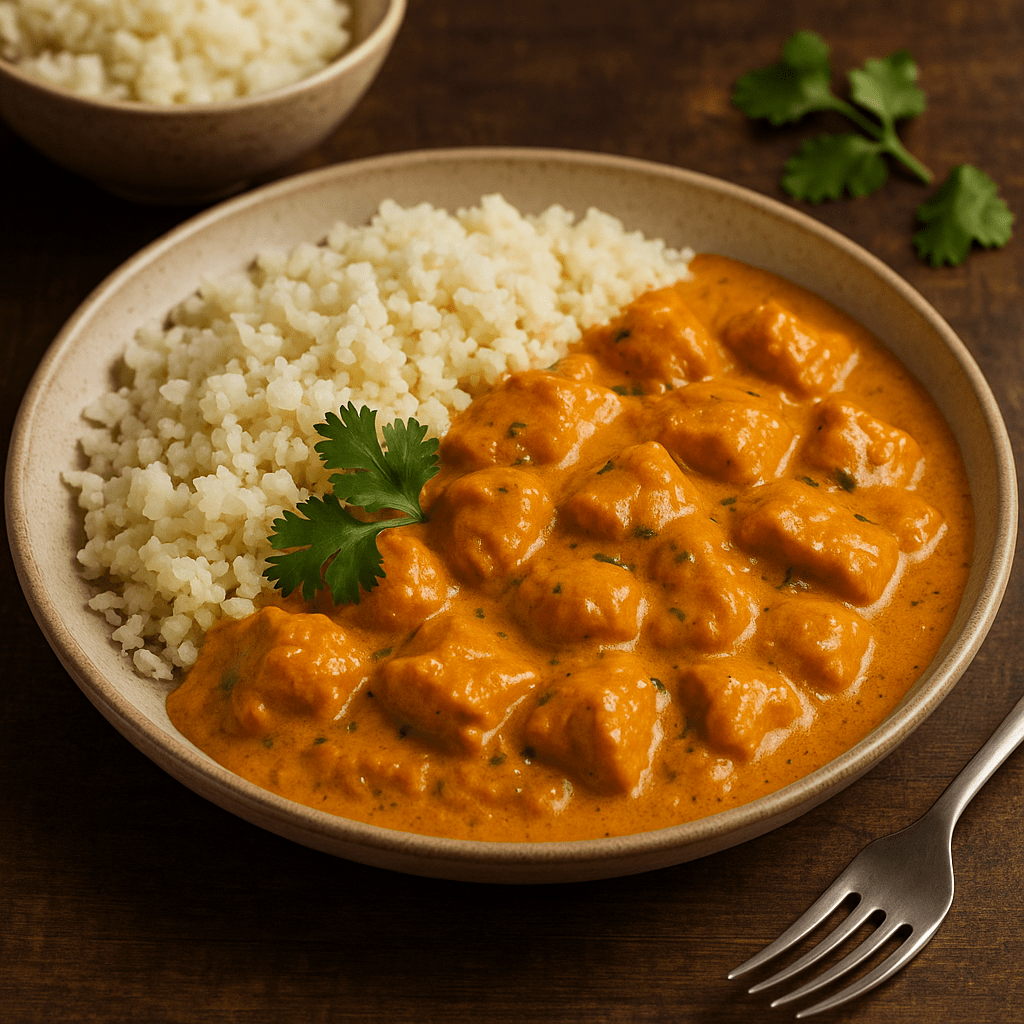
  • 🍗 Butter Chicken – Low Carb Version

    Creamy, aromatic, and full of rich Indian flavour – this butter chicken is a comforting low carb take on the classic Murgh Makhani. No sugar, no flour, no thickeners – just real ingredients and bold spices.


    Ingredients (Serves 4):

    For the marinade:

    • 500 g chicken thigh or breast, cut into chunks
    • 100 g full-fat Greek yogurt
    • 1 tablespoon lemon juice
    • 1 teaspoon ground cumin
    • 1 teaspoon garam masala
    • 1 teaspoon paprika
    • 1/2 teaspoon turmeric
    • 1/2 teaspoon salt
    • 1/2 teaspoon chili powder (optional)
    • 2 garlic cloves, minced
    • 1 teaspoon grated fresh ginger

    For the sauce:

    • 2 tablespoons butter or ghee
    • 1 small onion, finely chopped (optional)
    • 2 garlic cloves, minced
    • 1 teaspoon grated ginger
    • 1 teaspoon garam masala
    • 1/2 teaspoon ground cumin
    • 1/2 teaspoon turmeric
    • 1/2 teaspoon chili powder (optional)
    • 200 g tomato passata or blended tomatoes (no sugar added)
    • 150 ml heavy cream or coconut cream
    • Salt to taste
    • Fresh coriander (for garnish)

    🥣 Instructions:

    1. Marinate the chicken: In a bowl, mix all marinade ingredients. Cover and refrigerate for at least 1 hour (overnight for best results).
    2. Cook the chicken: Grill, bake, or pan-fry the marinated chicken until browned and cooked through. Set aside.
    3. Prepare the sauce: In a large pan, heat the butter/ghee. Sauté onion (if using), garlic, and ginger until soft and fragrant.
    4. Add spices (garam masala, cumin, turmeric, chili) and cook for 30 seconds.
    5. Add tomato passata. Simmer for 10 minutes on low heat.
    6. Stir in cream and cooked chicken. Simmer for another 5–10 minutes until the sauce thickens and the chicken is coated.
    7. Season with salt to taste. Garnish with chopped coriander.

    🍽️ Serving Suggestions:

    • With cauliflower rice
    • With steamed greens (spinach, broccoli)
    • With your keto chapati – recipe available on the blog!

    ℹ️ Tips:

    • For dairy-free: use coconut yogurt for marinade and coconut cream in the sauce.
    • To thicken naturally, simmer longer or use a touch of cream cheese (low carb and smooth).

    🔍 Nutritional Values per Serving:

    • Calories: 399 kcal
    • Protein: 26.5 g
    • Fat: 29.2 g
    • Carbohydrates: 8.1 g
  • 🍛 Traditional Chicken Curry – Low Carb Version

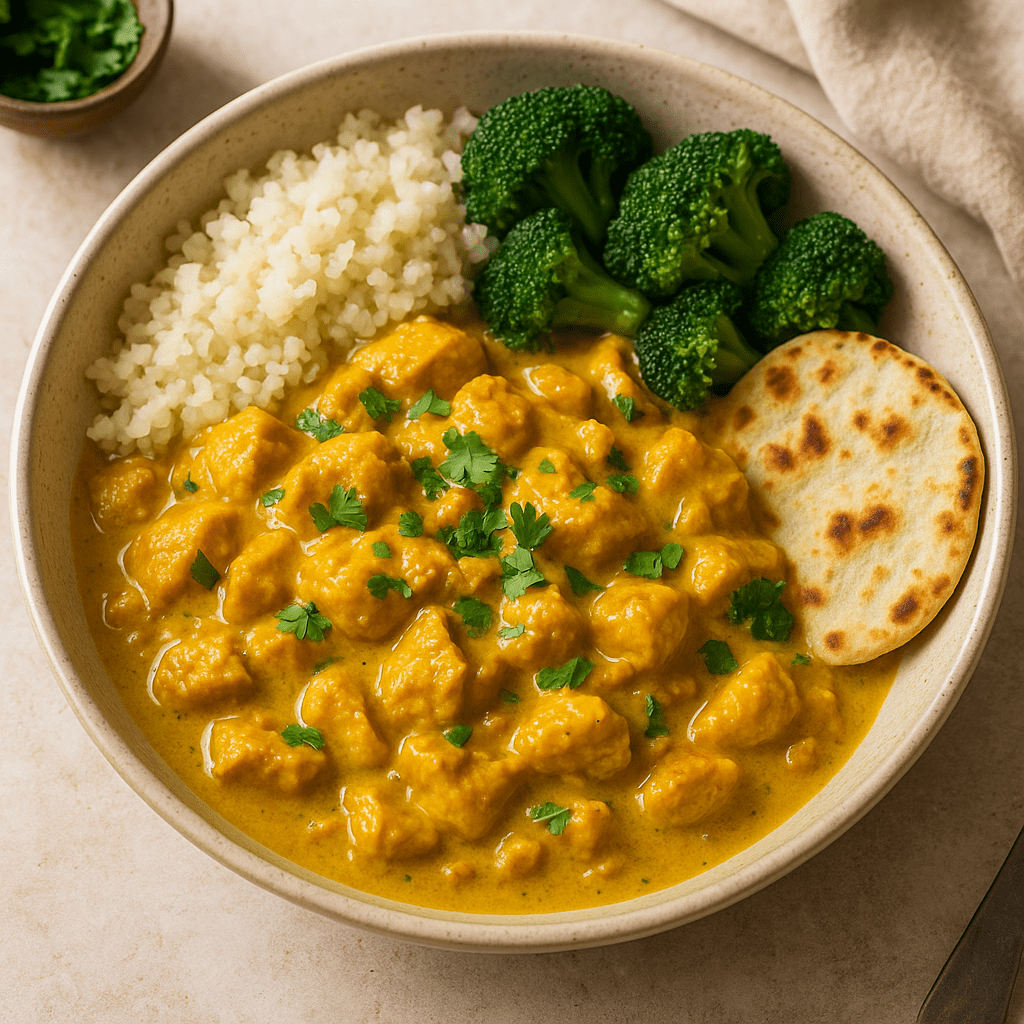
    Curry is a classic dish of Indian cuisine, known around the world for its rich aroma and bold flavor. In this version, I wanted to preserve the essence of the traditional recipe while adapting it for those following a low-carb lifestyle. This curry includes all the key spices, creamy coconut milk, and tender pieces of chicken – but instead of rice, I serve it with cauliflower “rice”, low-carb vegetables, or my homemade keto chapati (recipe available on the blog!).
    Perfect for anyone who loves authentic flavors but wants to reduce their carbohydrate intake.


    ✅ Ingredients (Serves 4):

    • 500 g chicken breast or thigh, diced
    • 2 tablespoons coconut oil or clarified butter (ghee)
    • 1 medium onion (optional – slow sautéing reduces natural sugar content)
    • 2 garlic cloves, finely chopped
    • 1 teaspoon freshly grated ginger
    • 1 tablespoon curry paste (e.g., tikka masala, madras, or curry powder – no added sugar)
    • 1/2 teaspoon turmeric
    • 1/2 teaspoon ground cumin (optional)
    • 1/2 teaspoon chili powder or sweet paprika
    • 200–250 ml full-fat coconut milk
    • 100 ml water or broth (optional, for a thinner sauce)
    • 1 tomato (peeled and finely chopped) or 1 tablespoon tomato paste
    • Salt and pepper to taste
    • Fresh coriander for garnish

    🥣 Instructions:

    1. In a deep pan or pot, heat the oil or ghee. Sauté the onion on low heat until soft and golden (up to 10 minutes).
    2. Add the garlic, ginger, and spices. Cook for 30–60 seconds until fragrant.
    3. Add the chicken and fry until lightly golden on all sides.
    4. Stir in the tomato or tomato paste and cook for another 2 minutes.
    5. Add the coconut milk and water or broth. Cover and simmer on low heat for 20–25 minutes.
    6. Season with salt and pepper to taste, and garnish with coriander.

    🍽️ Serving Suggestions:

    • With cauliflower rice (lightly sautéed grated cauliflower with butter or curry)
    • With steamed or stir-fried vegetables (e.g., broccoli, spinach)
    • With low-carb flatbread or my keto chapati – see the recipe on the blog!

    ℹ️ Tips:

    • For extra depth of flavor, add 1/2 tsp of garam masala at the end of cooking.
    • If you’re not strictly tracking carbs, a spoonful of Greek yogurt makes a great garnish.
    • You can also add extra low-carb vegetables such as zucchini or spinach.

    🔍 Nutritional Values per Serving:

    • Calories: 352 kcal
    • Protein: 30.0 g
    • Fat: 22.6 g
    • Carbohydrates: 6.3 g

  • 🫓 Keto Chapati with Bamboo Fiber Flour

    Low-Carb | High-Fiber | Gluten-Free | Diabetic-Friendly

    Looking for a keto-friendly alternative to Indian flatbread? This Keto Chapati is soft, flexible, and made without grains or gluten – perfect for anyone following a low-carb, diabetic, or high-fiber diet.

    Made with bamboo fiber flour, ground flaxseed, and psyllium husk, it holds together well and delivers satisfying texture and taste without the carbs.


    🧾 Ingredients (Makes 4 chapatis):

    • 6 tbsp bamboo fiber flour (~40 g)
    • 2 eggs
    • 2 tbsp ground flaxseed
    • 1 tsp psyllium husk powder (optional but recommended for structure)
    • 1 tbsp olive oil
    • ~4–6 tbsp warm water (add gradually)
    • Pinch of salt

    👩‍🍳 Instructions:

    1. In a bowl, combine bamboo fiber flour, ground flaxseed, psyllium husk, and salt.
    2. Add eggs and olive oil, then gradually mix in the warm water to form a soft, sticky dough.
    3. Let the dough rest for 10 minutes – the fiber will absorb moisture and become pliable.
    4. Divide the dough into 4 equal parts.
    5. Roll each piece between two sheets of baking paper or on a silicone mat to form thin, round flatbreads.
    6. Heat a dry non-stick pan over medium heat (no oil needed).
    7. Cook each chapati for 1.5–2 minutes per side, until golden spots appear. Press lightly with a spatula if needed.
    8. Serve warm as a wrap, side bread, or with curries.

    🔥 Pan Tip:

    Always cook on a dry pan, just like traditional Indian roti. The olive oil in the dough is enough – no need to add more fat when cooking.


    🔢 Nutrition Per 1 Chapati (1/4 batch):

    NutrientAmount
    Calories~110 kcal
    Protein~5 g
    Fat~8 g
    Carbohydrates~2 g
    Fiber~6 g
    Net Carbs~0 g

    ✅ Why You’ll Love It:

    • Soft and flexible – easy to roll or fold
    • High in fiber – great for digestion and blood sugar balance
    • Gluten-free and grain-free
    • Easy to store and reheat

    🧊 Storage:

    Keep in the fridge for up to 2 days, or freeze between parchment sheets. Reheat in a dry pan or briefly in the microwave with a splash of water.

  • 🥯 Keto Bread Rolls with Bamboo Fiber & Cottage Cheese

    Low-Carb | High-Fiber | Diabetic-Friendly

    These soft, fiber-rich bread rolls are perfect for keto, low-carb, and diabetic-friendly diets. With minimal net carbs and plenty of fiber, they support digestive health and blood sugar balance – and taste amazing fresh from the oven!

    🧾 Ingredients (makes 6 rolls):

    • 250 g full-fat dry cottage cheese (not the creamy one – choose pressed or drained style)
    • 4 eggs
    • 6 heaped tbsp bamboo fiber flour
    • 4 tbsp ground flax-seed
    • 2 tsp psyllium husk (optional, but recommended)
    • 2 tsp olive oil
    • 2 tsp baking powder
    • Pinch of salt

    👩‍🍳 Instructions:

    1. Preheat oven to 180°C (356°F).
    2. In a large bowl, mix all ingredients until a sticky dough forms.
    3. Wet your hands to prevent sticking, and shape 5–6 small rolls.
    4. Place on a parchment-lined baking tray.
    5. Bake for 25–30 minutes or until golden and firm to the touch.
    6. Let cool before slicing – they firm up as they rest.

    🔢 Nutrition per Roll (1/6 batch):

    NutrientAmount
    Calories~145 kcal
    Protein~10 g
    Fat~9 g
    Carbohydrates~3.5 g
    Fiber~6 g
    Net Carbs~<1 g

    💬 Tip:

    Enjoy with butter, avocado, or as a base for your favorite keto sandwich fillings. Perfect for lunchboxes, picnics, or healthy snacking!

  • 🌿 Discover Bamboo Fiber Flour: A Low-Carb Boost for Your Baking!

    Bamboo fiber flour is a unique, plant-based ingredient growing in popularity among low-carb and keto dieters. Made from the inner fibers of bamboo plants, this flour is extremely low in carbohydrates, high in fiber, and naturally gluten-free. It has no strong flavor of its own, which makes it a perfect base for both sweet and savory bakes.

    Bamboo flour adds bulk and structure to baked goods without increasing the carb count – ideal for anyone watching their blood sugar, managing diabetes, or following a ketogenic lifestyle.


    🧁 Bamboo & Almond Flour Muffins (Keto-Friendly)

    These muffins are light, fiber-rich, and fully low-carb thanks to bamboo fiber flour and almond flour. Perfect for people following a keto or diabetic-friendly diet.

    Ingredients (makes approx. 12 muffins):

    • 2 cups bamboo fiber flour (approx. 80g)
    • 1 cup almond flour (approx. 96g)
    • 2 tsp baking powder
    • 1 tsp baking soda
    • ½ cup melted butter (approx. 113g)
    • ½ tsp salt
    • ½ cup erythritol or xylitol (approx. 100g)
    • 1 cup unsweetened almond milk (240ml)
    • 2 eggs (approx. 100g total)

    Instructions:

    1. Preheat oven to 175°C (350°F).
    2. In a large bowl, mix bamboo fiber flour, almond flour, baking powder, baking soda, and salt.
    3. In another bowl, whisk melted butter, sweetener, eggs, and almond milk.
    4. Combine wet and dry ingredients until just mixed.
    5. Divide batter into 12 greased muffin cups.
    6. Bake for 20–25 minutes or until golden and firm.

    🔢 Nutrition Facts (Per 1 Muffin — 1/12th of batch):

    NutrientAmount
    Calories~145 kcal
    Protein~5.5 g
    Fat~12 g
    Carbohydrates~5 g
    Fiber~6 g
    Net Carbs~<1 g

    These muffins are low in digestible carbohydrates and high in fiber, making them ideal for keto or diabetic diets.


    💡 Why Bamboo & Almond Flour?

    Both flours are:

    • Gluten-free
    • Low-carb
    • Blood sugar friendly
    • Rich in fiber (bamboo) and healthy fats (almond)

    This makes the combination perfect for people who want to enjoy baking without compromising their health goals.


    🦶 Foot Health Tip

    If you’re diabetic or at risk, limiting carbs while boosting fiber helps stabilize blood glucose – reducing the risk of nerve damage and foot ulcers. Recipes like these are not just tasty – they’re a step toward better foot health.

  • “95% of Nutrition Experts Have Ties to Industry” – What Nina Teicholz Discovered About Your Diet

    For decades, we were told: Fat is bad, especially saturated fat. Choose margarine, eat whole grains, avoid red meat.
    But what if this advice wasn’t based on science… but on politics, money, and industry influence?

    In her eye-opening book The Big Fat Surprise, investigative journalist Nina Teicholz reveals the hidden forces that shaped official dietary guidelines, and how they’ve contributed to chronic illness, obesity, and confusion about what’s truly healthy.


    🧠 How Fat Became Public Enemy #1

    The origins of the anti-fat movement can be traced to the 1950s, when American scientist Ancel Keys introduced the lipid hypothesis – the idea that saturated fat raises cholesterol, leading to heart disease.

    However, as Teicholz shows in her research, Keys cherry-picked his data, excluding countries that contradicted his theory. From a total of 22 countries, he only presented data from 6 – those that fit his narrative.

    Despite the lack of strong scientific support, Keys’ theory gained traction thanks to political pressure, media support, and industry backing. Soon, butter, eggs, and meat were demonized, while low-fat, high-carb foods were promoted worldwide.


    💼 Who Writes Our Dietary Guidelines?

    Teicholz reveals a disturbing fact: 95% of experts involved in writing government nutrition guidelines have financial ties to the food or pharmaceutical industry.
    This means that public health policies are often shaped by corporate interests, not by unbiased science.

    For example, the American Heart Association (AHA) was a small, unknown organization in the 1940s – until it received a massive $1.7 million donation from Procter & Gamble, the manufacturer of Crisco vegetable shortening.
    Soon after, the AHA began recommending vegetable oils and margarine over butter or lard, pushing millions of people to switch to processed fats.


    🧬 Are Saturated Fats Really Harmful?

    Contrary to what we’ve been told, modern research (many studies reviewed in Teicholz’s book) fails to show a clear link between saturated fat and heart disease. In fact:

    • Saturated fats are more chemically stable and less likely to oxidize than vegetable oils.
    • They are essential for brain health, hormone production, and cell membrane integrity.
    • They help absorb fat-soluble vitamins A, D, E, and K – crucial for immune and metabolic health.

    Teicholz argues that saturated fats have been unfairly blamed, while refined carbs, processed seed oils, and sugar escaped scrutiny.


    🌱 Veganism – Free Choice or Corporate Narrative?

    The push for plant-based diets may seem modern and ethical, but Teicholz cautions that it’s often driven by ideological agendas and corporate profits.

    Many companies now profit from ultra-processed vegan products, lab-grown meat, and synthetic supplements, often promoted under the guise of “sustainability” or “health.”
    Yet, long-term studies on strict vegan diets are lacking, and nutritional deficiencies are a real risk, especially for children, pregnant women, and the elderly.


    📚 Key Takeaways from The Big Fat Surprise

    ✅ Saturated fats like butter, eggs, and red meat are not harmful – and may even be protective.
    ✅ Highly refined vegetable oils (like soybean, corn, or sunflower oil) may pose health risks.
    ✅ Official dietary guidelines are often influenced by corporate interests, not neutral science.
    ✅ Returning to traditional foods – unprocessed and nutrient-dense – is a safer, more natural path.
    ✅ We must demand transparency and independence in nutritional science.


    🗣 Who Do You Trust?

    Thanks to Nina Teicholz’s decade-long investigation, we now understand how flawed – and even dangerous – many official dietary recommendations have been.
    If we want to live healthier, longer lives, we need to reclaim our food choices from corporate control and go back to real food, informed by real science.


    📖 Recommended Resources:

    • The Big Fat Surprise – Nina Teicholz
    • Podcasts with Nina Teicholz (e.g. Dr. Mark Hyman’s The Doctor’s Farmacy)
    • Documentaries: Fat Fiction, The Magic Pill
  • Animal vs. Plant Proteins – Are We Ignoring the Whole Truth?

    In recent years, plant-based diets have gained massive popularity, often promoted as healthier, more ethical, and environmentally friendly alternatives to diets rich in animal products. But are plant proteins really superior to animal proteins when it comes to supporting the human body?

    A critical review by Polish researchers Prof. Grażyna Cichosz and Dr. Hanna Czeczot challenges the widespread assumption that plant proteins are always the better choice. Their 2013 article titled “Controversies around diet proteins” dives into the biological, nutritional, and metabolic implications of replacing animal proteins with plant-based alternatives.


    🧬 Protein Quality: Not All Sources Are Equal

    Proteins are made up of amino acids, nine of which are essential—meaning the human body cannot synthesize them and must obtain them from food.

    • Animal proteins (from meat, dairy, eggs, and fish) contain all essential amino acids in optimal proportions for human physiology.
    • Plant proteins often lack one or more essential amino acids, such as methionine, lysine, or tryptophan.

    The authors emphasize the vital role of sulfur-containing amino acids (like methionine and cysteine) found predominantly in animal proteins. These amino acids are essential for:

    • Glutathione production (a key antioxidant in cellular defense)
    • Liver detoxification
    • Collagen formation
    • Brain development and neurotransmitter balance

    🌱 The Risks of Over-Relying on Plant Proteins

    While plant proteins can be part of a healthy diet, replacing animal proteins entirely—especially in vulnerable populations—may lead to unintended consequences:

    1. Nutrient Deficiencies
      Plant-based proteins often come with lower bioavailability of nutrients such as vitamin B12, iron, zinc, and omega-3 fatty acids (EPA/DHA), which are abundant in animal-based sources.
    2. Imbalanced Amino Acid Profile
      Relying heavily on cereals, legumes, or soy products can result in deficiencies of key amino acids, potentially affecting muscle maintenance, immune function, and neurological health.
    3. Digestive Issues
      Some plant-based proteins contain anti-nutrients (e.g., phytic acid, lectins, oxalates), which may hinder the absorption of minerals and irritate the digestive tract.

    🥩 Animal Proteins – Still Essential?

    Cichosz and Czeczot argue that animal-derived proteins remain irreplaceable in the human diet, particularly for:

    • Children and adolescents during growth
    • Pregnant and lactating women
    • Elderly people, who are at greater risk of sarcopenia (muscle loss)
    • People recovering from illness or injury

    They also warn against politicizing nutrition and allowing economic or ideological motivations to override scientific facts about human physiology.


    🌿 So Should We Avoid Plant Proteins?

    Not at all.

    Plant proteins (from beans, lentils, nuts, seeds, and whole grains) offer fiber, phytochemicals, and lower saturated fat, contributing to a healthy cardiovascular profile. However, they should complement—not replace—animal proteins, especially in diets aiming for complete amino acid coverage.


    🔍 Final Takeaway

    The debate over plant vs. animal proteins is not black and white. As Cichosz and Czeczot highlight, the human body thrives on high-quality, bioavailable proteins, and animal proteins remain the gold standard in this regard.

    Before making sweeping dietary changes, especially under the influence of popular trends, we should ask:

    ❝Is this choice supported by biology—or just by marketing?❞


    📚 Reference

    Cichosz, G., & Czeczot, H. (2013). Controversies around diet proteins. Polski Merkuriusz Lekarski, 35(210), 397–401. PMID: 24490473


  • Processed Food: A Hidden Driver of Modern Illnesses?

    The Modern Diet – Fast, Cheap, but Dangerous?

    In a world where convenience often dictates our food choices, ultra-processed food has become a staple in many diets. However, emerging evidence suggests that these products—though affordable and long-lasting—could pose serious risks to our health.


    What Is Processed or Ultra-Processed Food?

    Processed food refers to products that have been significantly altered from their natural state. Ultra-processed foods (UPFs) typically contain:

    • Artificial sweeteners (e.g., aspartame)
    • Flavor enhancers (e.g., MSG)
    • Emulsifiers and stabilizers
    • Genetically modified soy protein
    • Refined vegetable oils
    • Preservatives, colorants, and synthetic additives

    Common examples include: packaged snacks, fast food, instant soups, sweetened beverages, deli meats, and soy-based meat substitutes.


    Key Health Risks Associated with Processed Food

    🧬 Cancer Risk

    A large-scale British study published in The Lancet found a clear correlation between the intake of ultra-processed food and the risk of developing various cancers, especially in middle-aged adults.

    Reference: Fiolet, T. et al. (2018). Consumption of ultra-processed foods and cancer risk: results from NutriNet-Santé prospective cohort. BMJ, 360, k322. https://doi.org/10.1136/bmj.k322


    🌱 Gut Health and Autoimmune Concerns

    Genetically modified soy proteins contain immune-reactive globulins that may damage the intestinal lining, increasing permeability (“leaky gut”), disturbing the microbiome, and raising the risk of autoimmune disorders.

    Reference: Rezaie, A., Buresi, M., Lembo, A., et al. (2017). Hydrogen sulfide in gastrointestinal diseases. Digestive Diseases and Sciences, 62(9), 2241–2257. https://doi.org/10.1007/s10620-017-4626-2


    🧠 Neurotoxic Effects

    Additives like aspartame and MSG (monosodium glutamate) have been associated with:

    • Headaches and dizziness
    • Sleep disturbances
    • Cognitive impairment
    • Increased risk of neurodegenerative diseases

    Reference: Walton, R. G. (1996). Adverse reactions to aspartame: Double-blind challenge in patients from a vulnerable population. Biological Psychiatry, 40(8), 578–582.

    Reference: Olney, J. W. (1994). Excitotoxins in foods. Neurotoxicology, 15(3), 535–544.


    🔥 Oxidative Stress from Heated Oils

    Foods fried in vegetable oils release toxic aldehydes and acrylamide, which damage mitochondria, reduce energy production, and increase the risk of cancer.

    Reference: Zhang, Y., & Zhang, G. (2007). Formation and mitigation of acrylamide in heat-processed foods. Journal of Food Science, 72(6), R174–R183.


    🧪 Additives and Functional Ingredients

    Transglutaminase (“meat glue”) and food colorants are commonly used to improve texture or appearance. However, they may create novel protein structures that are poorly digested and unrecognized by the immune system.

    Reference: Gianferri, R., et al. (2021). Transglutaminase: A review of enzymatic properties and food applications. Foods, 10(12), 3086. https://doi.org/10.3390/foods10123086


    Why It Matters

    • Long-term consumption of ultra-processed foods is associated with higher mortality, obesity, heart disease, type 2 diabetes, and mental health disorders.
    • Children, the elderly, and people with chronic illness are most vulnerable to the effects of artificial food chemicals.
    • Nutrient absorption, hormone balance, fertility, cognitive development, and immune function can all be impaired.

    Reference: Monteiro, C. A., et al. (2019). Ultra-processed foods: what they are and how to identify them. Public Health Nutrition, 22(5), 936–941. https://doi.org/10.1017/S1368980018003762


    What You Can Do

    ✔ Choose whole, unprocessed foods
    ✔ Cook more meals at home
    ✔ Read ingredient labels carefully
    ✔ Avoid products with long, unrecognizable ingredient lists
    ✔ Prioritize quality protein sources, healthy fats, and fiber


    Final Thoughts

    Ultra-processed foods may offer convenience and low cost, but they come at a significant price to your health. The science is clear: what you eat shapes your long-term well-being. Make informed choices to protect your body and brain.

    🧠 Real food fuels real health.

  • 🐣 Easter Keto Tart with Chocolate and Nuts

    ✅ Ingredients:

    🥧 Crust:
    • 150 g almond flour
    • 30 g shredded coconut (or extra almond flour)
    • 1 egg
    • 50 g cold butter
    • 1–2 tbsp erythritol or keto sweetener
    • Pinch of salt
    • Optional: 1/4 tsp vanilla extract
    🍫 Chocolate Cream:
    • 100 ml heavy cream (or coconut cream)
    • 80 g dark chocolate (85–90% or sugar-free)
    • 1 tbsp butter
    • 1–2 tbsp sweetener (optional)
    🌰 Toppings:
    • Walnuts, flaked almonds, pumpkin seeds, shredded coconut
    • Raspberries or blueberries (optional)
    • Grated lemon or orange zest

    🔪 Instructions:

    1. Crust:

    1. In a bowl, mix almond flour, shredded coconut, sweetener, and salt.
    2. Add chopped butter and egg. Quickly knead the dough (add a bit of cream if too dry).
    3. Wrap in cling film and refrigerate for 30 minutes.
    4. Roll out between two sheets of parchment paper and place in a baking tray.
    5. Bake at 170°C (340°F) for 15–20 minutes until lightly golden.

    2. Chocolate Cream:

    1. Heat the cream in a saucepan until just boiling.
    2. Remove from heat, add chopped chocolate and butter, and stir until smooth.
    3. Sweeten to taste (optional).

    3. Assembly:

    1. Pour warm chocolate cream over the cooled crust.
    2. Decorate with nuts, seeds, and other toppings.
    3. Chill in the fridge for at least 1 hour.