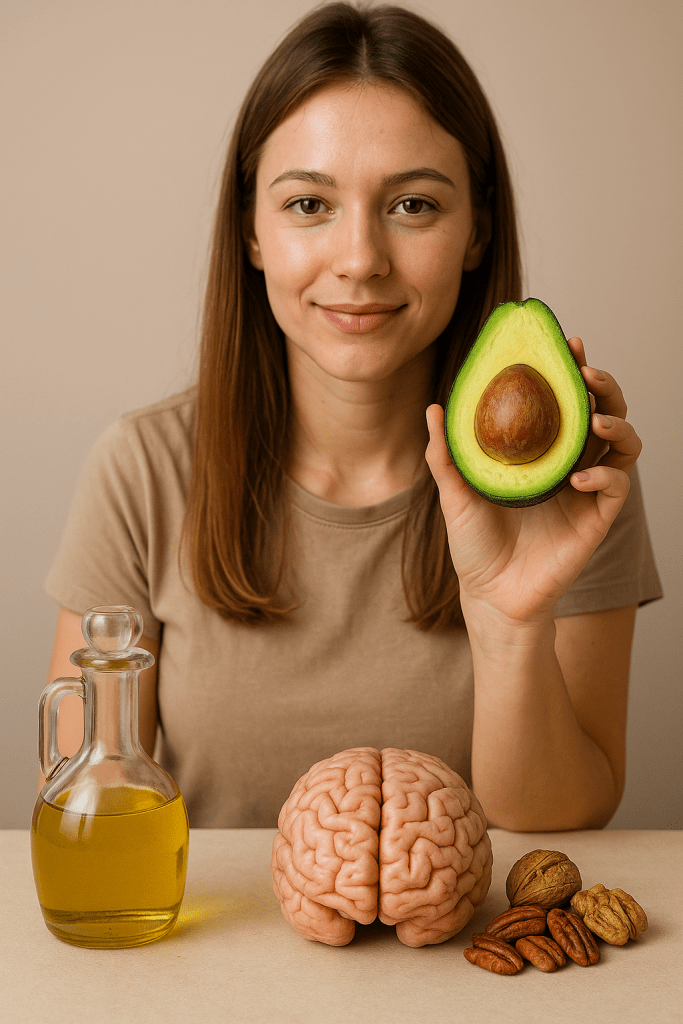
The Truth About Cholesterol and Ketones in Brain Health
For decades, we’ve been told that our brains depend on sugar, that without glucose, we simply can’t think, concentrate, or function. But recent scientific research paints a much more nuanced picture. While glucose is indeed a key brain fuel, your body has built-in systems that allow the brain to run efficiently even when dietary carbohydrates are very low.
In fact, your brain may work better when fueled by ketones, and it absolutely depends on cholesterol to stay healthy and sharp.
1. Does the Brain Need Sugar?
It’s true that the human brain uses around 100–120 grams of glucose per day, which represents about 20% of the body’s total energy needs. However, this doesn’t mean you have to eat sugar or carbohydrates to provide it.
When carbohydrate intake drops, during fasting, low-carb, or ketogenic diets, your liver naturally produces glucose through a process called gluconeogenesis. This means your body can make the small amount of glucose the brain still needs, even if you don’t consume carbs.
More importantly, when glucose is limited, the body begins to produce ketone bodies (beta-hydroxybutyrate and acetoacetate) from fat. These ketones cross the blood–brain barrier and serve as an alternative energy source for the brain. Studies have shown that during ketosis, ketones can supply up to 70% of the brain’s energy needs (Cunnane et al., 2016).
In short:
Your brain doesn’t require dietary sugar, it requires energy, which can come from glucose your body makes or from ketones produced from fat.
2. Ketones: The Brain’s Alternative Fuel
When your body is in a low-glucose state, ketones become a clean, efficient, and stable source of energy. Compared to glucose, ketones generate fewer free radicals and reduce oxidative stress.
This may explain why ketogenic or low-carb diets have shown potential benefits for neurological conditions such as epilepsy, Alzheimer’s disease, and mild cognitive impairment (Freeman et al., 2007; Fortier et al., 2019).
In a 2019 clinical study, older adults with mild cognitive impairment who drank a ketogenic supplement daily showed improved brain energy and cognitive performance (Fortier et al., 2019). Researchers suggest that ketones may help “rescue” brain function when glucose metabolism declines — a hallmark of early Alzheimer’s disease.
3. Cholesterol: The Brain’s Unsung Hero
While ketones provide energy, cholesterol builds the structure of your brain.
Although often portrayed negatively, cholesterol is one of the body’s most essential molecules, especially for your nervous system.
Did you know that:
- The brain represents only about 2% of body weight, yet it contains 20–25% of the body’s cholesterol (Dietschy, 2009).
- Cholesterol is vital for the formation of synapses, the communication points between neurons.
- It’s also a key component of myelin, the protective sheath that allows electrical signals to travel quickly and efficiently along nerve cells.
Importantly, the brain produces its own cholesterol, it does not depend on cholesterol from food because the blood–brain barrier prevents significant cholesterol transfer from the bloodstream (Björkhem & Meaney, 2004).
This means that extremely low-cholesterol diets, especially when combined with statins, may potentially affect cognitive function if brain cholesterol synthesis is disrupted.
As the Journal of the American College of Cardiology (Astrup et al., 2020) emphasized, dietary guidelines should focus on whole foods and overall dietary patterns, rather than demonizing natural fats or cholesterol.
4. The “Sugar for the Brain” Myth
The idea that “the brain needs sugar” is a half-truth that has been repeated for decades.
While the brain does rely on glucose, there’s no biological requirement to consume sugar or refined carbohydrates. The body tightly regulates blood glucose and can produce what the brain needs internally.
In fact, chronically high blood sugar and insulin resistance are linked to poorer memory, cognitive decline, and increased risk of dementia — a condition some researchers call “Type 3 Diabetes” (de la Monte, 2014; Neth & Craft, 2017).
On the other hand, moderate carbohydrate restriction and mild ketosis have been associated with improved brain energy efficiency and reduced inflammation, particularly in adults with metabolic syndrome or diabetes (Newman et al., 2019).
5. So What Should You Choose: Sugar or Fat?
If your goal is long-term brain health, choose stable energy over spikes.
That means:
- Fewer refined carbs and sugars
- More healthy fats (olive oil, avocados, fatty fish, eggs)
- Adequate protein
- Occasional fasting or low-carb eating periods to encourage mild ketosis
These habits promote stable blood sugar, reduce inflammation, and support the brain’s ability to use both glucose and ketones efficiently.
6. When to Be Cautious
While low-carb and ketogenic diets can benefit many adults, they’re not for everyone.
They require caution in:
- Type 1 diabetes (insulin must be carefully managed)
- Pregnancy and breastfeeding
- Underweight individuals or those with eating disorders
- Children, unless medically supervised for epilepsy
Always consult a qualified healthcare professional before making major dietary changes — especially if you take medication or have a chronic condition.
🧩 Final Thoughts
Your brain doesn’t “need” dietary sugar, it needs energy, balance, and the right building blocks.
Ketones can serve as an efficient and protective fuel, while cholesterol remains a vital structural component of every neuron.
So the next time you crave a sugary snack for a “brain boost,” remember:
what your brain truly loves is steady energy from healthy fats and a diet that keeps inflammation low and metabolism flexible.
🔬 References
- Astrup, A., Magkos, F., Bier, D. M., Brenna, J. T., Otto, M. C. de O., Hill, J. O., … & Krauss, R. M. (2020). Saturated fats and health: A reassessment and proposal for food-based recommendations. Journal of the American College of Cardiology, 76(7), 844–857.
- Björkhem, I., & Meaney, S. (2004). Brain cholesterol: long secret life behind a barrier. Arteriosclerosis, Thrombosis, and Vascular Biology, 24(5), 806–815.
- Cahill, G. F. (2006). Fuel metabolism in starvation. Annual Review of Nutrition, 26, 1–22.
- Cunnane, S. C., Courchesne-Loyer, A., Vandenberghe, C., St-Pierre, V., Fortier, M., Hennebelle, M., … & Castellano, C.-A. (2016). Can ketones compensate for deteriorating brain glucose uptake during aging? Annals of the New York Academy of Sciences, 1367(1), 12–20.
- de la Monte, S. M. (2014). Type 3 diabetes is sporadic Alzheimer’s disease: mini-review. European Neuropsychopharmacology, 24(12), 1954–1960.
- Dietschy, J. M. (2009). Central nervous system: cholesterol turnover, brain development and neurodegeneration. Biological Chemistry, 390(4), 287–293.
- Fortier, M., Castellano, C.-A., Croteau, E., Langlois, F., Bocti, C., St-Pierre, V., … & Cunnane, S. C. (2019). A ketogenic drink improves brain energy and some measures of cognition in mild cognitive impairment. Alzheimer’s & Dementia: Translational Research & Clinical Interventions, 5, 1–13.
- Freeman, J. M., Kossoff, E. H., & Hartman, A. L. (2007). The ketogenic diet: one decade later. Pediatrics, 119(3), 535–543.
- Neth, B. J., & Craft, S. (2017). Insulin resistance and Alzheimer’s disease: bioenergetic linkages. Frontiers in Aging Neuroscience, 9, 345.
- Newman, J. C., & Verdin, E. (2019). Ketone bodies as signaling metabolites. Trends in Endocrinology & Metabolism, 30(3), 213–226.

 Lifestyle for Healthy Feet