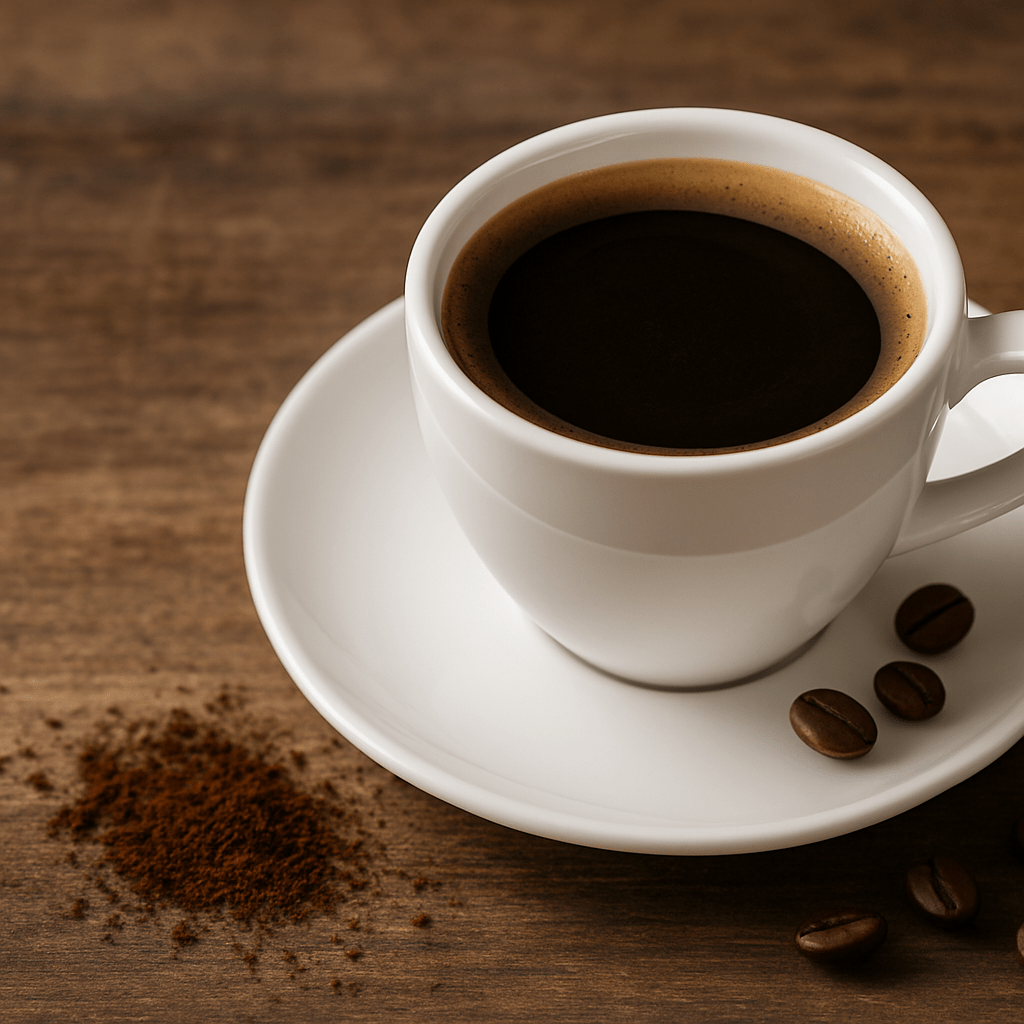
Can a simple cup of coffee really protect you from cancer?
For years, coffee had a bad reputation — people claimed it raised blood pressure, dehydrated the body, and was bad for the heart.
Today, research paints a completely different picture. Modern studies show that moderate coffee consumption may reduce the risk of several chronic diseases, including liver and colon cancer.
But can we really call it an anticancer beverage? Let’s look at what the latest scientific evidence says.
🔬 What’s inside coffee that makes it so special?
Coffee is more than caffeine. It contains over 1,000 bio-active compounds, including:
- Polyphenols (like chlorogenic acid) — anti-inflammatory and antioxidant,
- Diterpenes (cafestol and kahweol) — support liver detoxification enzymes,
- Melanoidins — formed during roasting, promote gut health,
- Minerals — magnesium, potassium, and niacin support metabolism.
These compounds help neutralize oxidative stress, reduce inflammation, and improve insulin sensitivity — mechanisms that may explain why regular coffee drinkers show lower rates of liver and colon cancers.
☕ Coffee and Liver Cancer — the strongest evidence
The link between coffee and a lower risk of liver cancer is one of the best documented.
- A large Japanese meta-analysis (Tamura et al., BMC Cancer, 2019) involving over 600,000 participants found that heavy coffee drinkers had about 50% lower risk of liver cancer compared with non-drinkers.
- An earlier Japanese prospective study (JNCI, 2007) reported that people drinking five or more cups daily had a 76% reduction in liver cancer risk.
Researchers believe that coffee helps by reducing inflammation and oxidative stress — particularly among individuals infected with hepatitis B or C viruses, which are major causes of liver cancer in Asia.
In Europe, the protective effect is milder but still significant. The EPIC cohort (over 500,000 people) and the WCRF/AICR 2024 report both show that regular coffee intake is linked to a 20–40% lower risk of liver cancer.
🌏 Why the effect differs between Japan and Europe
Several factors explain the differences:
- Main causes of liver disease: In Japan, hepatitis infections dominate; in Europe, it’s obesity, alcohol, and fatty liver.
- Genetic differences: Asian populations more often carry variants of genes (like CYP1A2) that slow caffeine metabolism.
- Coffee type: Japan mostly drinks filtered coffee; Europeans favor espresso or French press (which contain more diterpenes that can raise LDL).
- Baseline risk: A higher initial disease risk makes the relative effect appear stronger.
👉 The conclusion: the protective trend is universal, but its magnitude varies by population and lifestyle.
🧠 Coffee and Colorectal Cancer — fresh insights
A study from the USC Norris Comprehensive Cancer Center (Stephen Gruber et al.) and the MECC Study (Frontiers in Nutrition, 2024) examined more than 9,000 participants:
- Drinking 1–2 cups of coffee per day was linked to a 26% lower risk of colon cancer,
- Drinking more than 2.5 cups was associated with up to 50% lower risk,
- The effect was seen for both regular and decaffeinated coffee.
This suggests that the benefits come not from caffeine alone, but also from the complex mix of polyphenols, diterpenes, and antioxidants in coffee.
🧃 Does adding milk or cream destroy the benefits?
A common myth says that milk cancels out coffee’s antioxidants.
Recent research from the University of Copenhagen (Journal of Agricultural and Food Chemistry, 2023) found the opposite: milk proteins can actually stabilize antioxidants and prolong their activity in the body.
If you’re on a keto diet, coffee with cream or MCT oil can be even more beneficial — fat improves the absorption of fat-soluble polyphenols.
✅ In short: adding cream does not destroy coffee’s health benefits, as long as you:
- Skip sugar and syrups,
- Brew at 92–96 °C,
- Serve below 65 °C to avoid esophageal irritation.
❤️ What if you have high LDL cholesterol?
If your LDL is elevated, coffee type matters.
Unfiltered coffee (espresso, moka, French press) contains cafestol and kahweol, which can raise LDL levels.
🩺 The simple fix:
Drink paper-filtered coffee (drip, Chemex, Aeropress) — it retains flavor and antioxidants while removing most diterpenes.
That way, you keep the anti-inflammatory benefits without the cholesterol bump.
🔥 How much coffee is healthy?
According to the European Food Safety Authority (EFSA):
- Up to 400 mg of caffeine/day (about 3–5 cups) is safe for healthy adults.
- Pregnant women should limit to 200 mg/day.
Most benefits appear at 2–4 cups per day. Too much caffeine, however, may cause anxiety or disrupt sleep in sensitive individuals.
☕ Brewing coffee the healthy way
| Step | Recommendation | Why |
|---|---|---|
| Brewing temperature | 92–96 °C | Optimal extraction of polyphenols |
| Drinking temperature | < 65 °C | Avoids esophageal cancer risk (WHO/IARC) |
| Brewing method | Paper filter | Removes LDL-raising diterpenes |
| Ratio | 1:16–1:18 (coffee:water) | Specialty Coffee Association “Gold Cup” standard |
| Storage | Airtight, dry, cool | Preserves aroma and antioxidants |
🩸 Coffee and your cholesterol profile
Example: if your labs show LDL 165 mg/dL, HDL 70, TG 54, your metabolic profile is excellent despite high LDL — TG/HDL < 1 indicates good insulin sensitivity.
In this case, filtered coffee with cream fits perfectly into a keto or low-carb lifestyle.
For more insight, consider tracking:
- ApoB (LDL particle count),
- hs-CRP (inflammation marker),
- Fasting insulin or HOMA-IR.
These provide a better risk picture than total cholesterol alone.
🩺 What major health authorities say
- WHO / IARC (2016) — Coffee is not carcinogenic; only very hot drinks (> 65 °C) increase esophageal cancer risk.
- WCRF/AICR (2024) — Strong evidence that coffee protects against liver and endometrial cancer; probable benefit for colon cancer..
- BMJ Umbrella Review (Poole et al., 2017) — 3–4 cups/day linked to lower all-cause mortality and reduced risk of heart and liver disease.
- EFSA (2021) — Confirms caffeine safety up to 400 mg/day for adults.
☕ Bottom line
Coffee isn’t just an energy booster — it’s a scientifically supported wellness drink.
Its strongest protective effects are seen for liver and colon cancers, but benefits also extend to type 2 diabetes and cardiovascular health.
The keys: moderation, proper brewing, and mindful temperature.
You don’t need five cups a day like in Japanese studies — even 2–3 cups of well-brewed, filtered coffee without sugar can make a meaningful difference.
📚 References (credible scientific sources)
- Tamura T. et al. Coffee consumption and liver cancer risk in Japan: a meta-analysis of six prospective cohort studies. BMC Cancer, 2019.
- Inoue M. et al. Coffee drinking and hepatocellular carcinoma in a Japanese population. JNCI, 2007.
- WCRF/AICR. Continuous Update Project: Diet, Nutrition, Physical Activity and Liver Cancer., 2024.
- Poole R. et al. Coffee consumption and health: umbrella review of meta-analyses. BMJ, 2017.
- Gruber S. B. et al. MECC Study / USC Norris Comprehensive Cancer Center. Frontiers in Nutrition, 2024.
- EFSA Scientific Opinion on Caffeine Safety, 2021.
- WHO / IARC Monograph 116: Drinking Coffee, Mate and Very Hot Beverages., 2016.
- Jespersen A. et al. Protein–polyphenol interactions in coffee and milk: implications for antioxidant activity. Journal of Agricultural and Food Chemistry, 2023.
- EPIC Cohort Study, European Prospective Investigation into Cancer and Nutrition., Lancet Public Health, 2022.

 Lifestyle for Healthy Feet